
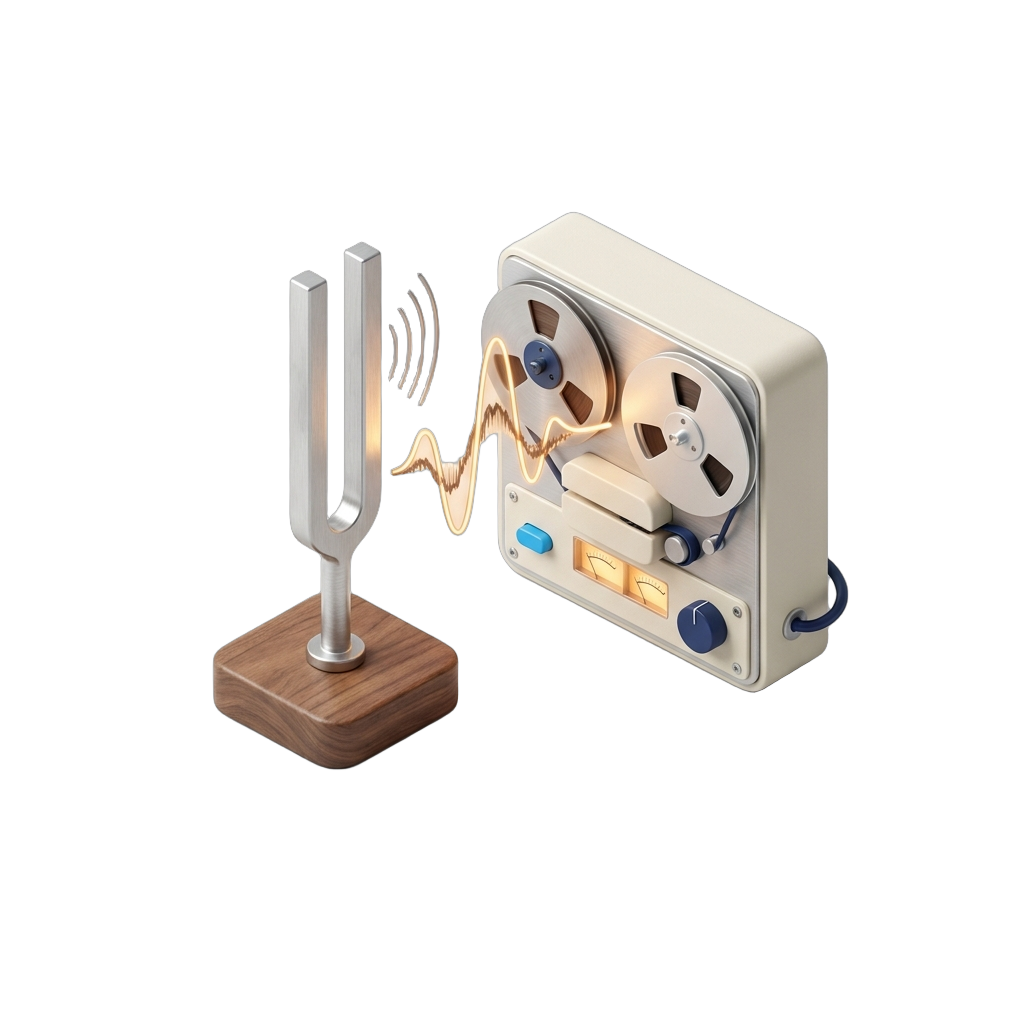
Timbral Memory Encoding
Timbral memory encoding is the cognitive process of storing the unique color, quality, or texture of a sound — distinct from its pitch or tempo — into long-term memory. It is highly sensitive to change: altering a sound’s timbre impairs explicit recognition, even when pitch and rhythm remain identical. This makes timbre one of the more fragile yet distinctive dimensions of auditory memory.
Timbre is what makes a middle C on a piano sound different from a middle C on a violin. It is defined by the overtone structure, attack, and spectral envelope of a sound rather than its fundamental frequency. Encoding this quality requires more than passive hearing — it involves active perceptual processing that binds the sonic texture to context, emotion, and identity.
Key properties:
- Distinctiveness: Timbral memory is highly specific — the brain encodes not just “a guitar” but the exact sonic signature of a particular recording or instrument.
- Fragility: Small changes in timbre (e.g., processing, remastering, or instrument substitution) can break recognition even when all other musical features are preserved.
- Emotional binding: Timbral memory is strongly coupled to emotional memory, which is why a specific voice or instrument can trigger involuntary recall of past experiences.
- Cross-modal interference: Visual cues about sound sources can alter timbral perception and memory, suggesting the encoding process is not purely auditory.
Relation to musical identity:
For musicians and listeners alike, timbral memory is central to recognizing artists, instruments, and recordings. It is why a listener can identify a vocalist from a single syllable, or why a guitarist’s tone is considered part of their artistic identity. In production, timbre is often the primary vehicle for emotional and aesthetic communication — melody and harmony are secondary to the sound itself.
Implications for memory research:
Timbral memory encoding challenges purely pitch-centric models of musical memory, suggesting auditory long-term memory is multidimensional. It also has implications for hearing loss, audio restoration, and the design of musical instruments and synthesis systems — all of which affect the fidelity of timbral encoding and retrieval.